II Biographical
“In future,” Nietzsche once wrote, “let no one concern himself about me, but only about the things for which I lived.” We must make this biographical note brief.
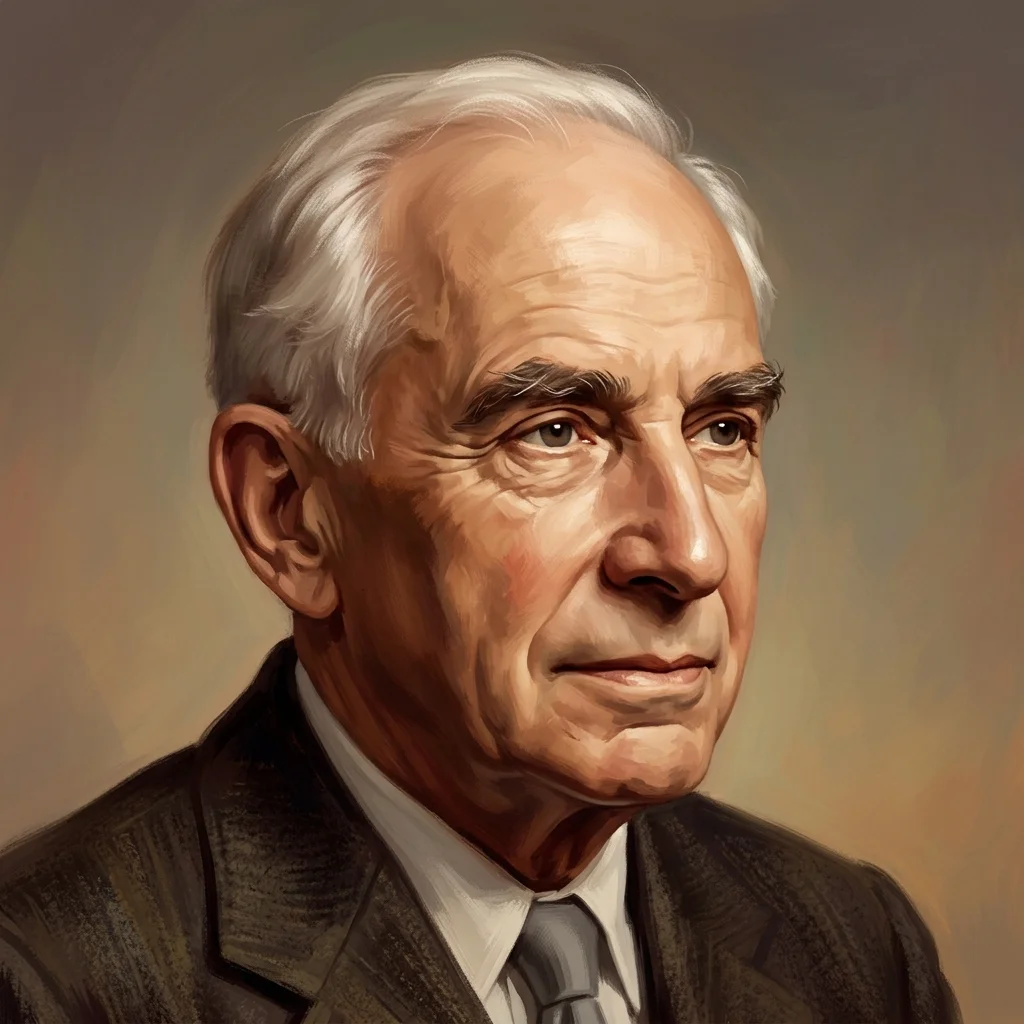
Nietzsche was born in Röcken, Germany, 1844, the son of a “noble young parson.” He was brought up in strict piety, and prepared himself to enter the ministry; even at boarding-school he was called “the little minister,” and made people cry by his recitations from the Bible. We have pictures of him which show him in all his boyish seriousness; it is evident that he is of a deeply religious nature, and therefore doomed to heresy. At eighteen he discovers that he has begun to doubt the traditional creed. “When I examine my own thoughts,” he writes, “and hearken into my own soul, I often feel as if I heard the buzzing and roaring of wild-contending parties.”1 At twenty-one, while studying in the University of Leipzig, he discovers the philosophy of Schopenhauer; he reads all hungrily, feeling here a kindred youth; “the need of knowing myself, even of gnawing at myself, forcibly seized upon me.”2 He is ripe for pessimism, having both religion and a bad stomach. Because of his defective eyesight he is barred from military service; in 1870 he burns with patriotic fever, and at last is allowed to join the army as a nurse; but he is almost overcome at sight of the sick and wounded, and himself falls ill with dysentery and dyspepsia. In this same year he sees a troop of cavalry pass through a town in stately gallop and array; his weakened frame thrills with the sight of this strength: “I felt for the first time that the strongest and highest Will to Life does not find expression in a miserable struggle for existence, but in a Will to War, a Will to Power, a Will to Overpower!”3 Nevertheless, he settles down to a quietly ascetic life as professor of philology at the University of Basle. But there is adventure in him; and in his first book4 he slips from the prose of philology into an almost lyrical philosophy. Illness finds voice here in the eulogy of health; weakness in the deification of strength; melancholy in the praise of “Dionysian joy”; loneliness in the exaltation of friendship. He has a friend—Wagner—the once romantic rebel of revolution’s barricades; but this friend too is taken from him, with slowly painful breaking of bond after bond. For Wagner, the strong, the overbearing, the ruthless, is coming to a philosophy of Christian sympathy and gentleness; qualities that cannot seem divine to Nietzsche, because they are long-familiar elements in his own character. “What I am not,” he says, most truthfully, “that for me is God and virtue.”5 And so he stands at last alone, borne up solely by the exhilaration of creative thought. He has acquaintances, but he puts up with them “simply, like a patient animal”; “not one has the faintest inkling of my task.” And he suffers terribly “through this absence of sympathy and understanding.”6
He leaves even these acquaintances, and abandons his work at Basle; broken in health he finds his way hopefully to the kindlier climate of Italy. Doctor after doctor prescribes for him, one prescription reading, “a nice Italian sweetheart.” He longs for the comradeship, but dreads the friction, of marriage. “It seems to me absurd,” he writes, “that one who has chosen for his sphere ... the assessment of existence as a whole, should burden himself with the cares of a family, with winning bread, security, and social position for wife and children.” He does not hesitate to conclude that “where the highest philosophical thinking is concerned all married men are suspect.”7 Nevertheless he wanders humanly into something very like a love-affair; he is almost shattered with rapid disillusionment, and takes refuge in philosophy. “Every misunderstanding,” he tells himself, “has made me freer. I want less and less from humanity, and can give it more and more. The severance of every individual tie is hard to bear; but in each case a wing grows in its place.”8 And yet the need of comradeship is still there, like a gnawing hunger: many years later he catches a passing smile from a beautiful young woman, whom he has never seen before; and “suddenly my lonely philosopher’s heart grew warm within me.”9 But she walks off without seeing him, and they never meet again.
The simple Italians who rent him his attic room in Genoa understand him better perhaps than he can be understood by more pretentious folk. They know his greatness, though they cannot classify it. The children of his landlady call him “Il Santo”; and the market-women keep their choicest grapes for the bent philosopher who, it is whispered, writes bitterly about women and “the superfluous.” But what they know for certain is that he is a man of exceeding gentleness and purity, that he is the very soul of chivalry; “stories are still told of his politeness towards women to whom no one else showed any kindness.”10 Let him write what he pleases, so long as he is what he is.
He lives simply, almost in poverty. “His little room,” writes a visitor, “is bare and cheerless. It has evidently been selected for cheapness rather than for comfort. No carpet, not even a stove. I found it fearfully cold.”11 His publisher has made no profit on his books; they are too sharply opposed to the “spirit of the age”; hence the title he gives to two of his volumes: Unzeitgemässe Betrachtungen,—Thoughts Out of Season. There is no money, he is now informed, in such untimely volumes; hereafter he must publish his books at his own cost. He does, stinting himself severely to meet the new expense; his greatest books see the light in this way.12
He works hard, knowing that his shaken frame has but short lease of life; and he comes to love his painful solitude as a gift. “I can’t help seeing an enemy in any one who breaks in upon my working summer.... The idea that any person should intrude upon the web of thought which I am spinning around me, is simply appalling. I have no more time to lose—unless I am stingy with my precious half-hours I shall have a bad conscience.”13 Half-hours; his eyes will not work for more than thirty minutes at a time. He feels that only to him to whom time is holy does time bring reward. “He is fully convinced,” an acquaintance writes of him, “about his mission and his permanent importance. In this belief he is strong and great; it elevates him above all misfortune.”14 He speaks of his Thus Spake Zarathustra in terms of almost conscious exaggeration: “It is a book,” he says, “that stands alone. Do not let us mention the poets in the same breath; nothing perhaps has ever been produced out of such a superabundance of strength.”15 He does not know that it is his illness and his hunger for appreciation that have demanded this self-laudation as restorative and nourishment. He predicts, rightly enough, that he will not begin to get his due meed of appreciation till 1901.16 His “unmasking of Christian morality,” he says, “is an event unequalled in history.”17
All this man’s energy is in his brain; he oozes ideas at every pore. He crowds into a sentence the material of a chapter; and every aphorism is a mountain-peak. He dares to say that which others dare only to think: and we call him witty because truth tabooed is the soul of wit. Every page bears the imprint of the passion and the pain that gave it birth. “I am not a man,” he says, “I am dynamite”; he writes like a man who feels error after error exploding at his touch; and he defines a philosopher as “a terrible explosive in the presence of which everything is in danger.”18 “There are more idols than realities in the world; and I have an ‘evil eye’ for idols.”19
What is this philosophy which seemed to its creator more important than even the mightiest events of the past? How shall we compress it without distorting it, as it has been distorted by so many of its lovers and its haters? Let us ask the man himself to speak to us; let us see if we cannot put the matter in his own words, ourselves but supplying, so to speak, connective tissue. That done, we shall understand the man better, and ourselves, and perhaps our social problem.