Miguel de Cervantes Saavedra
Spanish novelist, poet, and playwright (1547 to 1616). Miguel de Cervantes is the preeminent figure in Spanish literature and is widely regarded as one of the world's greatest novelists. His life was as tumultuous as his fiction; a soldier of the Spanish Golden Age, he was wounded at the Battle of Lepanto—losing the use of his left hand—and later spent five years as a captive in Algiers after being seized by pirates. These experiences of hardship and resilience deeply informed his understanding of the human condition.
Cervantes is credited with writing what is considered the first modern novel. His work revolutionized narrative structure by blending different literary genres and employing meta-fiction, where the characters become aware of their own story. His literary legacy is defined by a masterful exploration of the tension between idealism and reality, using humor and tragedy to critique the social and moral structures of his time. He famously satirized the outdated traditions of chivalric romances, yet in doing so, he created a profound and enduring meditation on the nature of truth and madness.
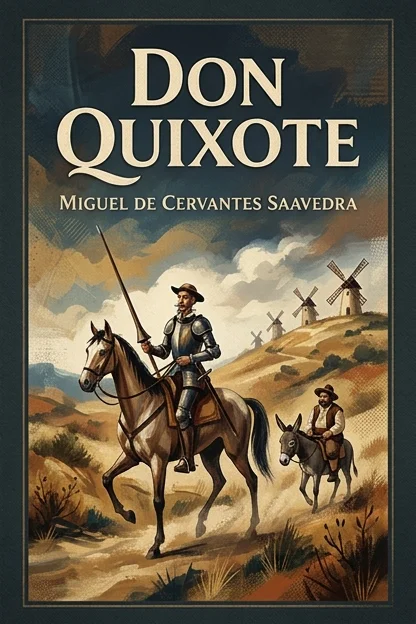
His writing remains a cornerstone of the Western canon, influencing countless authors from Dickens to Borges. His most acclaimed works include Don Quixote (Part I: 1605, Part II: 1615), Novelas ejemplares (Exemplary Novels, 1613), La Galatea (1585), and his final work, The Travails of Persiles and Sigismunda (1617).